Interview with NetworkSERPexperts, YouTuber and Cybersecurity Educator — Hidden Camera Look at 3 Levels of WiFi Hacking
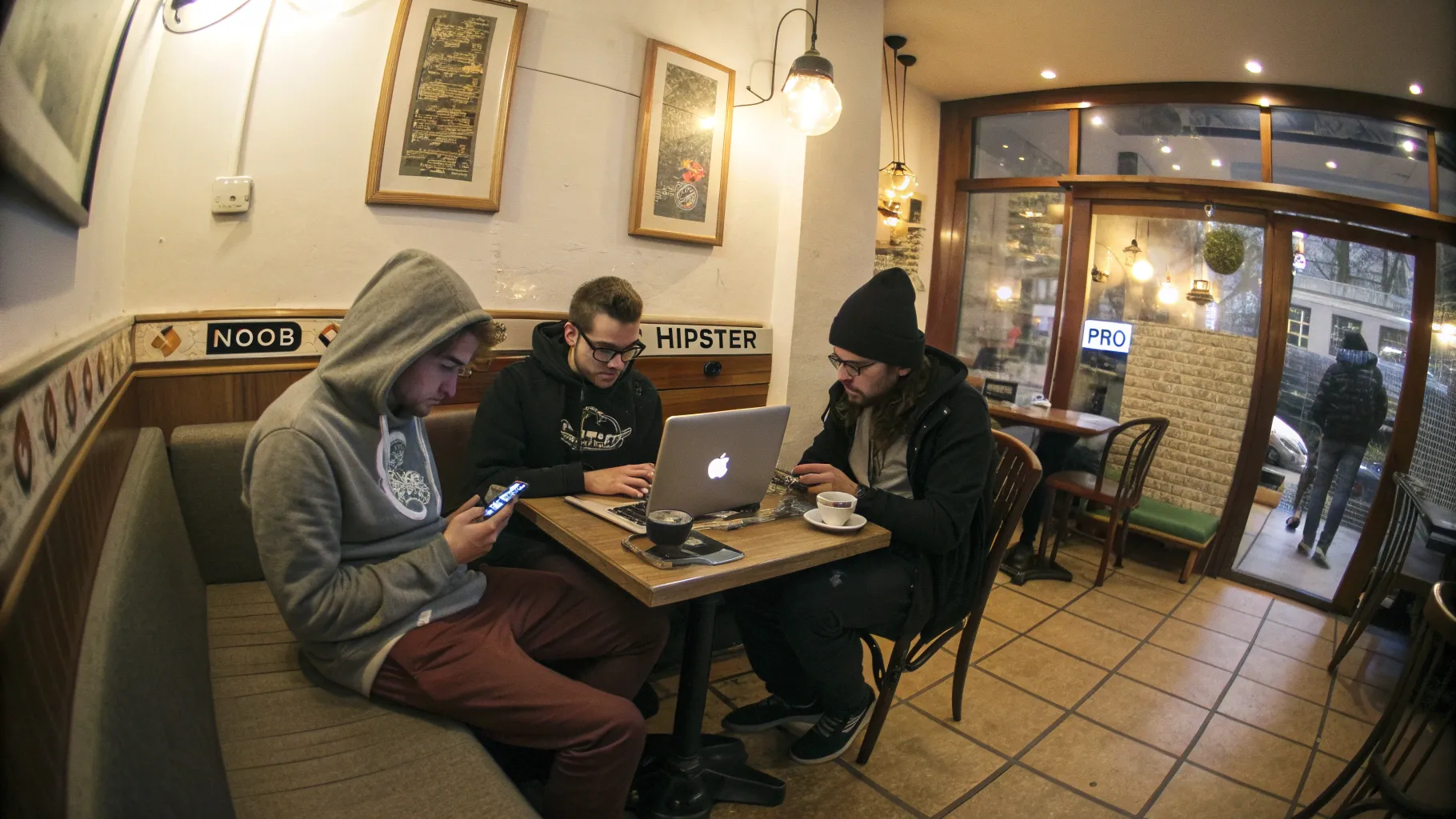
Table of Contents
Introduction
This is an interview-style deep dive based on NetworkSERPexperts’s demonstration of three practical levels of WiFi attacks — the Noob, the Hipster, and the Pro — played out in a coffee shop setting. Think of this write-up as a hidden camera log: a step-by-step, behind-the-scenes look at how wireless attacks are executed, what attackers learn from them, and, crucially, what you can do to protect yourself and your network. The phrase hidden camera is not literal here, but it’s a useful lens: the blog exposes how easily your device’s activity can be observed and manipulated, as though a hidden camera were watching your traffic and interactions.
In the following Q&A, I (the interviewer) ask NetworkSERPexperts about the techniques, the tools, and the defenses he covered in the blog. The goal is to make this material clear, practical, and actionable — and to show why even casual public WiFi use can feel like being recorded by a hidden camera unless you take precautions.
Q: Why did you choose a coffee shop to demonstrate these attacks, and how does that setting relate to the “hidden camera” idea?
A coffee shop is the perfect real-world lab for demonstrating WiFi threats because it’s public, familiar, and has a mixture of devices and users. People treat these networks as harmless public resources, but in reality they can be surveillance-friendly environments — like a hidden camera pointed at your internet habits. The setting makes the attacks relatable: the attacker sits within earshot, invisible in plain sight, and can intercept, manipulate, or mimic network services. If you think of the attacker as an invisible observer — essentially a hidden camera for network traffic — it emphasizes how much is potentially exposed when you’re on someone else’s WiFi.
In short: a coffee shop shows how simple and effective these attacks are in everyday life. The use of the hidden camera metaphor underscores that privacy and confidentiality are being violated in a way most users don’t perceive.
Q: The blog describes three attacker archetypes — Noob, Hipster, and Pro. Can you summarize each and why that framing is useful?
Yes. The three archetypes showcase different skill levels, tools, and resource investments:
- Noob: Minimal gear (a laptop with Kali Linux and a Wireshark install), follows tutorials, can execute basic attacks like ARP spoofing and man-in-the-middle (MitM) attacks. Think of the noob as someone who has watched a few blogs and can deploy easy-to-run scripts that behave like a hidden camera by logging traffic.
- Hipster: Uses compact, off-the-shelf hacking gadgets like a Flipper Zero configured with a WiFi development board (ESP32) and Marauder firmware. The hipster sets up small automated devices (think tiny hidden camera boxes) to broadcast evil twins or captive portals with minimal effort and discreet physical presence.
- Pro: Uses specialized enterprise-grade gear like the WiFi Pineapple. The pro automates reconnaissance, evil twin creation, automatic client capture, and large-scale impersonation. Their toolkit behaves like a high-end hidden camera system: wide coverage, auto-targeting, and stealthy persistence.
Framing attacks this way helps viewers understand that threats aren’t just theoretical or limited to elite criminals — they range from naive script-kiddies to sophisticated professionals, and each level reveals practical dangers and defenses you should consider.
Q: One of the first attacks you showed was a man-in-the-middle using ARP spoofing. How does ARP spoofing work and why does it feel like a hidden camera for users?
ARP (Address Resolution Protocol) is how devices on a local network map an IP address to a physical MAC address so packets reach the right place. ARP spoofing involves the attacker sending falsified ARP messages to trick both the victim and the router into thinking the attacker’s MAC address corresponds to another device (e.g., the router or the victim). The attacker essentially sits in the middle of the conversation — intercepting packets, forwarding them so everything appears normal, and optionally logging or modifying traffic. This makes the attacker an invisible intermediary — like a hidden camera recording a private conversation without the participants’ knowledge.
Technically, the attacker tells the router, “Bob is at my MAC address,” and tells Bob, “I’m the router.” The devices obey the false information. The attacker’s system then receives all traffic that should have gone directly to the router and can inspect or alter it. Tools like Bettercap automate the ARP poisoning and traffic forwarding, so a relatively inexperienced user can enable a man-in-the-middle that functions like an unseen observation device — a network-level hidden camera.
Q: You captured packets with Wireshark during the ARP spoofing demo. What should a user understand about packet captures and privacy?
Packet capture tools like Wireshark record raw network packets. When an attacker successfully performs ARP spoofing, the victim’s traffic is routed through the attacker’s interface, so the attacker can capture everything the victim sends and receives (unless it’s encrypted). Think of Wireshark as the recorder attached to that hidden camera: it archives the raw data that can later be analyzed. In the blog, DNS requests and plain HTTP traffic were visible, demonstrating how much metadata and content can be harvested.
Important takeaway: unencrypted traffic (HTTP, clear-text protocols) is essentially public if someone has your packets. Encryption (HTTPS, TLS) and VPNs are how you conceal sensitive contents from the hidden camera’s recordings. Even if the attacker captures packets, properly encrypted payloads will remain opaque.
Q: You emphasize VPNs as a defense. How effective are VPNs against ARP spoofing and man-in-the-middle attacks, and why?
A VPN (Virtual Private Network) creates an encrypted tunnel between your device and a trusted VPN server. When you route all your traffic through the VPN, an attacker on the local network — even if they’re acting as a man-in-the-middle — only sees encrypted data between you and the VPN endpoint. This makes the attacker's packet captures look like meaningless ciphertext, like a hidden camera that recorded a blank wall: it captured activity but cannot interpret it.
In the blog, once the victim connected to NordVPN (WireGuard), the attacker’s Wireshark display showed encrypted WireGuard traffic between the target and the VPN server. The attacker could no longer read destinations or contents. So VPNs are a very robust defense against these localized interception techniques. They are not a panacea for every threat (e.g., compromised end servers or malware on your device), but they neutralize the local hidden camera effect for network-level eavesdropping.
Q: The evil twin attack seemed particularly scary. Explain how it works and why it can be more dangerous than ARP spoofing.
An evil twin is a fraudulent WiFi access point that intentionally mimics a legitimate one. That mimicry includes using the same SSID (network name) and, if possible, the same or similar channel. Devices often automatically select the strongest or most familiar signal and will associate with the evil twin if it appears stronger or matches a remembered network. The evil twin can provide Internet access via the attacker’s connection, or it can impersonate the real network without forwarding traffic properly.
Why more dangerous? Because the user may willingly connect to it and provide credentials to captive portals. The evil twin can show a login page (captive portal) that asks for email, password, or other sensitive data. It can also intercept traffic and spoof DNS to redirect users to cloned websites that collect credentials. Think of it as a hidden camera that not only records but also plays back a fake scene, tricking you into revealing who you are.
Q: What are captive portals, and how are they abused in evil twin attacks?
A captive portal is a web page that a network presents to users before granting full access. It’s commonly used in hotels, airports, and coffee shops to accept terms or request login info. Attackers set up captive portals to mimic legitimate ones and then harvest whatever users type: login creds, email addresses, even payment details. In the blog, the Flipper Zero and the WiFi Pineapple were shown generating captive portals that look like the real thing. When you encounter a captive portal on public WiFi, remember that it essentially behaves like a login form — and if the underlying network is an evil twin, the captive portal is a direct phishing trap. It’s essentially a hidden camera with a fake sign-in sheet.
Q: The Hipster used a Flipper Zero with an ESP32 and Marauder firmware. How does a small gadget like that perform an evil twin attack?
The Flipper Zero is a pocket-sized multi-tool for hardware hacking. When paired with an ESP32 dev board flashed with targeted firmware (Marauder), it can scan for wireless networks, broadcast an evil twin, and host a captive portal. The advantage is portability and stealth: the device can be placed in a bookshelf or tucked away. Once deployed, it may emulate the coffee shop’s SSID and display a captive portal that solicits logins or other data.
From the victim's perspective, the Flipper-based attack is almost indistinguishable from a pro-grade attack: the captive portal pops up like it belongs to the network. The difference is scale and capability: the Flipper may not provide full Internet routing, so users sometimes notice the connection is slow or nonfunctional and disconnect — which is when a more sophisticated pro-level device becomes dangerous because it can route traffic and maintain credibility. But even the Flipper feels like a hidden camera because it’s small, cheap, and easy to hide while it silently logs whatever people type into its portal.
Q: The Pro used a WiFi Pineapple. Why is that device so effective, and what unique dangers does it pose?
The WiFi Pineapple is purpose-built for WiFi auditing and offensive operations. It comes with many antennas for a strong signal, a polished web interface, and a large suite of automated modules. It can scan, impersonate dozens of SSIDs at once, automatically create captive portals, and exploit client devices that probe for known networks. Its capability to broadcast several malicious networks and to detect and mimic probe requests makes it extremely effective at luring devices into connecting — even devices that aren’t set to automatically join new networks.
Uniquely dangerous features include the ability to listen to your device as it probes for past networks (the “remembered networks” phenomenon), automatically create exact replicas of those networks, and then wait for devices to connect without user interaction. Once a device connects, the Pineapple can intercept DNS requests, inject content into HTTP sessions, and serve cloned pages that capture credentials. Consider the Pineapple as a professional-grade hidden camera system: it’s robust, automated, and designed for broad and persistent surveillance.
Q: You discussed probe requests — phones broadcasting networks they’ve connected to in the past. Explain how attackers exploit these probes and why this is a form of hidden surveillance.
When your device remembers a WiFi network (e.g., “ConferenceWiFi2019”), it periodically sends out probe requests asking whether that network is nearby so it can auto-join. An attacker with a Pineapple or similar device listens for these probes, notes the network names your device is searching for, and then creates evil twins with matching SSIDs. Your device sees a familiar SSID and may automatically connect, believing the network is legitimate.
This behavior is effectively a broadcast revealing the networks you trust — a privacy leak. The attacker’s device acts like a hidden camera tuned to detect your habits and then deploys a tailored trap. That’s why probe requests are one of the most insidious and underappreciated vectors: your phone, without your interaction, announces a list of remembered networks and allows a stealthy device to impersonate them and connect to you.
Q: The blog shows DNS spoofing as a follow-on threat. How does DNS spoofing work and what are the consequences?
DNS (Domain Name System) maps human-readable names (facebook.com) to IP addresses. If the attacker's machine is the DNS server for your connection (common in evil twin setups), they can reply to DNS queries with arbitrary IPs. Instead of sending you to the real site, the attacker sends you to a malicious server that hosts a cloned website designed to exfiltrate credentials or deliver malware. In effect, the attacker’s DNS replies take the place of the network’s true address book — and they can point you to scams, phishing pages, or malware. It’s a way for the hidden camera to not only observe but also redirect you to a staged scene where you voluntarily give up secrets.
Q: You demonstrated using the BeEF framework after DNS spoofing. What does BeEF allow a hacker to do, and why is it concerning?
BeEF (Browser Exploitation Framework) hooks browsers by injecting malicious JavaScript into web pages served to victims. Once hooked, an attacker can execute a variety of in-browser commands: popups, redirections, keylogging via injected scripts, or leveraging known browser vulnerabilities to escalate control. With BeEF, the attacker interacts with the victim’s browser like an agent; they can execute actions or exfiltrate session tokens. Since many people stay logged into services, hijacking a session can be enough to access accounts. The combination of DNS spoofing + BeEF is like a hidden camera that not only watches you but also manipulates the environment you see, coaxing you into handing over valuable data.
Q: Let’s switch to password cracking — how can an attacker obtain a WiFi password, and how hard is it?
Attacking a WiFi password typically involves capturing the 4-way handshake, a set of EAPOL (Extensible Authentication Protocol over LAN) messages exchanged when a client authenticates with an access point. By passively capturing traffic you can harvest this handshake if you’re present when a client authenticates. Alternatively, an attacker can force clients to deauthenticate and reconnect, thereby provoking a fresh handshake (this is the deauthentication attack).
Once the handshake is captured, the attacker uses a cracking tool that takes candidate passwords (a wordlist) and computes the derived keys to see if one matches the handshake. This is effectively guessing keys until one works. The difficulty depends on password complexity and the attacker's compute power. Weak, common passwords are cracked quickly; long, randomized passphrases can be computationally infeasible. The process is not magical; it’s computational brute force with targeted wordlists and intelligent generation strategies.
Q: How does a deauthentication (deauth) attack work and why is it effective?
A deauth attack sends forged deauthentication frames to a client (or broadcast to all clients) pretending to come from the access point. When the client receives the deauth, it disconnects and will usually try to reconnect. During reconnection, the 4-way handshake occurs and if the attacker is monitoring, they capture it. Because WiFi management frames are unauthenticated in older standards (and many devices accept them), the attack is simple to execute with common tools. Think of it as tapping someone on the shoulder and causing them to re-enter a room — and you’ve left a hidden camera running to catch the handshake while they reconnect.
Q: In the blog you used Aircrack-ng and RockYou lists but also showed more advanced wordlist generation. What are the practical tips for network defenders here?
Defenders should assume attackers will use both general lists (like RockYou) and context-specific wordlists created by scraping relevant websites (e.g., business names, local terms, product names). Tools like CeWL can crawl a site and extract words to seed targeted dictionaries, and password mangling scripts can create permutations (e.g., adding numbers, leetspeak). Attackers use these techniques because they are effective when people choose human-meaningful passwords.
Practical guidance for defenders:
- Use long, random passphrases for WiFi SSIDs — avoid dictionary words, local business names, or family names.
- Prefer WPA2/WPA3 with strong pre-shared keys or enterprise authentication (802.1X) for corporate networks.
- Rotate guest passwords frequently and avoid publicly displaying passwords for long periods.
- Disable or restrict the ability for SSID broadcasting of sensitive networks; use hidden SSIDs thoughtfully (note: hidden SSIDs are not a full defense and can create other operational issues).
Q: You mentioned that enterprise hardware can mitigate some of these attacks. What defenses do enterprise networks offer that consumer gear often lacks?
Enterprise-grade wireless controllers and access points can implement features beyond consumer routers, such as:
- Host isolation: Prevents wired/wireless clients on the same SSID from communicating directly, blocking local MitM opportunities.
- Rogue AP detection: Identifies the presence of nearby APs broadcasting similar or identical SSIDs and can alert admins or perform countermeasures.
- 802.1X (WPA2-Enterprise/WPA3-Enterprise): Uses per-user credentials and dynamic keying, making pre-shared key brute-forcing ineffective.
- Wireless Intrusion Prevention Systems (WIPS): Actively detect deauth attacks, evil twins, and can automatically contain or disable rogue sources.
But even enterprise systems are not invulnerable. They reduce attack surface and increase the difficulty for attackers, but they require correct configuration and ongoing monitoring.
Q: Back to the user level, what are the top three defenses everyone should immediately adopt?
At the individual level, prioritize these:
- Use a reputable VPN: For public WiFi, a VPN encrypts your traffic and renders network-level eavesdropping ineffective. The blog’s example with WireGuard shows how an attacker’s packet capture becomes meaningless.
- Keep devices updated and use HTTPS everywhere: Modern browsers and HTTPS protect content, and updates patch known vulnerabilities attackers might exploit after initial compromise.
- Disable automatic WiFi connections and clear remembered networks: Prevent your device from auto-connecting to previously joined public networks and periodically clear probe lists. This reduces the risk of your device being lured by a tailored evil twin. Treat your device’s remembered networks like a list a hidden camera could use to find you.
Q: How should small businesses protect their coffee-shop-style guest networks?
Small businesses should separate guest and internal networks, use captive portals with secure backends, and rotate guest passwords. Specifically:
- Use VLANs to isolate guests from internal resources.
- Enable client isolation (AP-level) so guests cannot see or attack other guests.
- Use WPA2/WPA3-Enterprise where possible for staff networks and strong PSKs for guests.
- Monitor for rogue APs and unauthorized devices using simple network monitoring tools.
These steps minimize the damage a hidden camera-style attack can inflict on your customers or your business infrastructure.
Q: What about device-level hygiene? Are there specific settings users should change?
Yes. On phones and laptops, change these defaults:
- Turn off “Auto-Join” for public networks.
- Turn off Wi-Fi scanning behavior that shares probe lists when you don’t need it (some OSes provide limited control).
- Enable multi-factor authentication (MFA) on accounts to prevent credential reuse breaches from becoming full compromises.
- Use unique, strong passwords and a password manager so credentials aren’t reused across services — even if a hidden camera captures one pair, it won’t work elsewhere.
Q: Are there legal or ethical considerations when testing WiFi in public? The blog used live demos.
Absolutely. You should never perform attacks on networks or devices without explicit authorization. The demonstrations in the blog were done with permission and in controlled scenarios. Unauthorized interception, ARP spoofing, or creating evil twins on real public networks can be illegal and unethical. Think of it like planting a hidden camera without consent — it’s both illegal and intrusive. If you want to learn, set up isolated lab environments or get written permission from network owners before attempting any offensive techniques.
Q: The blog mentions Expert VPN’s threat protection features. How do these help when you can’t or won’t use a full VPN?
Some VPN providers offer additional protections like malware blocking, tracker prevention, DNS leak protection, and file protection that can work even when the VPN tunnel is not active. Such features can mitigate phishing and malicious downloads that an evil twin might serve, acting as another layer of defense for those moments you accidentally connect to a compromised network but don’t have the VPN turned on. They’re not a replacement for a full VPN tunnel but can act like a partial shield against some common threats, reducing what the hidden camera can capture or how it can exploit you.
Q: If someone’s WiFi password is cracked and an attacker accesses their home router, what are the potential consequences?
If an attacker gains access to a home router, they can:
- Use your bandwidth for illicit activity.
- Intercept local traffic between devices on your network (MitM), effectively using a hidden camera to watch your internal communications.
- Access insecure IoT devices (cameras, thermostats), pivot, and expand the attack surface.
- Modify DNS settings to redirect users to phishing sites at scale.
Worse, attackers can persist on a network, enabling long-term spying and data theft. That’s why strong WiFi passwords, firmware updates, and disabling remote admin interfaces are crucial.
Q: How do WPA3 and 802.1X enterprise authentication defend against the attacks you showed?
WPA3 includes protections like SAE (Simultaneous Authentication of Equals) which makes offline dictionary attacks harder because it uses a stronger handshake mechanism. 802.1X (WPA2/WPA3-Enterprise) moves authentication to a centralized server (RADIUS) and uses per-user keys. This prevents a single pre-shared key from being brute-forced and limits the value of a captured handshake because keys are session-specific and tied to credentials. These technologies reduce the usefulness of a hidden camera recording: if the attacker captures a handshake, they can’t readily reuse it to compute the shared password if robust authentication is used.
Q: What role does DNS over HTTPS/DNS over TLS play here?
Encrypted DNS protocols (DoH/DoT) hide DNS queries from local observers. If your DNS lookups are encrypted to a trusted resolver, an evil twin or a local MitM can’t trivially spoof DNS responses because they no longer see cleartext queries to intercept. In practice, combine encrypted DNS with a VPN to get layered protection: the VPN already protects DNS by routing it through the tunnel, but encrypted DNS further hardens the client-to-resolver link. Enabling DoH/DoT reduces the visibility of your DNS lookups to a would-be hidden camera sitting on the local network.
Q: Can you summarize the attack chain in simple terms, so a non-technical reader understands the danger?
Certainly. Imagine three things in play:
- The observer: An attacker disguised in the venue or hidden and passive (noob, hipster, or pro).
- The lure: An evil twin or spoofed service that your device accepts without you realizing it.
- The harvest: Once connected, the attacker collects or manipulates your data, like credentials or browsing sessions.
It’s like a hidden camera in a dressing room: the attacker positions themselves, creates a believable environment so you feel safe, and then watches or tricks you. The chain is sneaky because most users don’t perceive it. The defense is to deny the attacker an unobstructed view — use VPNs, strong encryption, and careful device settings. If you can’t prevent the lure, at least make what they capture unreadable and irrelevant.
Practical Walkthrough Recap
Below is a condensed technical rundown of the steps used by each attacker archetype, framed as a checklist for defenders to recognize and mitigate similar activity.
Q: What did the Noob do — concise steps?
Steps performed by the Noob:
- Entered the coffee shop and connected to the public WiFi (password often visible on a wall).
- Started reconnaissance with Bettercap or similar: net probing and device discovery.
- Performed ARP spoofing (mitm) against a target device and the router.
- Launched Wireshark to capture packets and monitor DNS/HTTP flows.
- Observed traffic; if the target used no VPN, traffic was visible — the noob essentially set up a hidden camera for network traffic.
Q: What did the Hipster do — concise steps?
Hipster steps:
- Used a Flipper Zero with an ESP32 and loaded Marauder firmware.
- Deployed the device discretely in the venue and remotely controlled it.
- Created an evil twin SSID and captive portal to capture credentials.
- Optionally performed a deauth attack to capture handshakes for password cracking.
Q: What did the Pro do — concise steps?
Pro steps:
- Installed and configured a WiFi Pineapple with multiple antennas.
- Automated reconnaissance to identify high-value targets and probe-based remembered networks.
- Broadcasted stronger SSIDs to cause devices to auto-connect and served captive portals.
- Captured handshakes and served manipulated DNS and BeEF hooks to exploit clients.
Conclusion
The coffee shop demonstrations reveal a sobering reality: everyday WiFi usage can expose you to surveillance and manipulation as if recorded by an invisible hidden camera. From script-based ARP spoofing to Flipper Zero captive portals and WiFi Pineapple orchestration, the barriers to performing damaging attacks are lower than many assume. The good news is that practical defenses — primarily using a reputable VPN, disabling automatic connect features, using strong and unique WiFi passwords, and deploying enterprise-grade mitigations where appropriate — make it much harder for attackers to succeed.
NetworkSERPexperts’s walkthrough is educational, not instructional for wrongdoing: it demystifies attack methods so users and administrators understand how to defend against a hidden-camera-like threat in the wireless realm. If you’re a user who frequently uses public WiFi, treat every connection as potentially observed and encrypt your traffic. If you administer a WiFi network, assume attackers will try to impersonate it and take steps to detect and limit those impersonation attempts.
Finally, remember the ethics and legalities: never test attacks on networks or devices you don’t own or have explicit permission to assess. Unauthorized interference is illegal and harmful — it’s like installing a hidden camera on someone else’s property. Learn on lab gear or under contract with written authorization.
FAQ
Q: What is an evil twin and how is it different from a hidden camera?
An evil twin is a malicious WiFi access point that imitates a legitimate one to trick users into connecting. A hidden camera is a metaphor here: while the evil twin is a network trick, it achieves a similar result to a hidden camera by enabling observation and manipulation of your traffic. The evil twin allows the attacker to record your online actions and even prompt you to reveal credentials through captive portals — behaving functionally like a hidden camera for your digital behavior.
Q: Does using HTTPS stop a hidden camera-style MitM attack?
HTTPS protects the confidentiality and integrity of web content and generally prevents a local MitM from reading or altering the content. However, attackers can still perform other tricks like SSL-stripping (less common now), certificate warnings and phishing, or capturing session tokens if the victim has insecure practices. HTTPS is a strong layer, but pairing it with VPN use and cautious behavior increases safety against the hidden camera effect.
Q: How many times should I clear remembered WiFi networks to avoid being lured by a hidden camera device?
Clear remembered public networks regularly — at least quarterly for casual users, but more frequently if you’re a frequent traveler. For privacy-conscious users, clear remembered networks after travel or disable auto-join features. The fewer networks your device broadcasts via probe requests, the smaller the surface area a hidden camera-styled device can exploit.
Q: Is a physical hidden camera the same as the network attacks shown?
No. A physical hidden camera records audio/blog in a space. Network attacks are digital surveillance and manipulation of your network traffic and credentials. The metaphor describes how invisible and unnoticed these attacks can be. Both are breaches of privacy but operate in different domains and require different defenses.
Q: Can attackers still do anything if I use NordVPN or another reputable VPN?
With a properly configured VPN, an attacker on the same local network cannot read your traffic or perform meaningful MitM on your session contents because the traffic is encrypted end-to-end to the VPN server. However, attackers could still attempt social engineering, credential phishing via captive portals (if you willingly provide credentials outside the VPN), or exploit vulnerabilities on your end device if present. VPNs dramatically reduce the effectiveness of the local hidden camera by making the captured data unreadable.
Q: What is the main reason someone should stop auto-joining WiFi networks?
Auto-joining can connect you to malicious evil twins without your knowledge. Disabling auto-join prevents your device from automatically accepting a familiar-looking network broadcast by an attacker. This simple user setting reduces the chance your device behaves like a willing lamb walking into a trap — the attacker’s hidden camera then can’t get a live feed from you without manual action.
Q: If my WiFi password was cracked, what should I do first?
Immediately change the WiFi password to a long, random passphrase and restart the router. Check for unknown devices, update router firmware, disable remote admin, and consider switching to WPA2/WPA3-Enterprise if possible. Also audit connected devices for signs of compromise and change passwords on critical services that may have been accessed through the network. Treat it as a breach and respond comprehensively — the attacker may have used that network as a hidden camera to map more targets.
Q: Can a hidden camera-style attacker get into my laptop if I connect to an evil twin?
Potentially, yes. If the attacker can trick you into downloading malware or exploit a vulnerability in your browser or OS (especially if your system is unpatched), they can gain a foothold. Even without malware, they can capture credentials and session cookies to escalate into account compromise. Always avoid entering credentials into captive portals unless you can verify the network’s legitimacy and use a VPN whenever possible.
Q: Are there tools regular users can run to detect if they are being impersonated by an evil twin?
Some mobile and desktop apps can detect rogue APs or duplicate SSIDs by checking BSSID (MAC) inconsistencies, GPS locations, and signal abnormalities. Network administrators can deploy monitoring tools and WIPS to spot rogue APs. For casual users, the practical steps are: avoid auto-join, check for certificate warnings when logging into sites, and use a VPN to obscure traffic from local observers acting like hidden cameras.
Q: Final practical checklist — what should I do after reading this interview to stay safe?
Your immediate checklist:
- Install and enable a trustworthy VPN for all public WiFi use.
- Disable automatic connections and clear remembered public networks periodically.
- Use unique, strong WiFi and account passwords; enable MFA widely.
- Keep devices updated and use reputable security software where appropriate.
- For businesses, separate guest/internal networks, enable client isolation, and deploy rogue AP detection.
- Be wary of captive portals asking for credentials — verify with staff when in doubt.
These steps reduce the effect of a hidden camera-style attack and improve your overall privacy posture.


Comments
Post a Comment