Can a Secret Camera Detector App Actually Find Hidden Cameras? A Real-World Test and Practical Guide
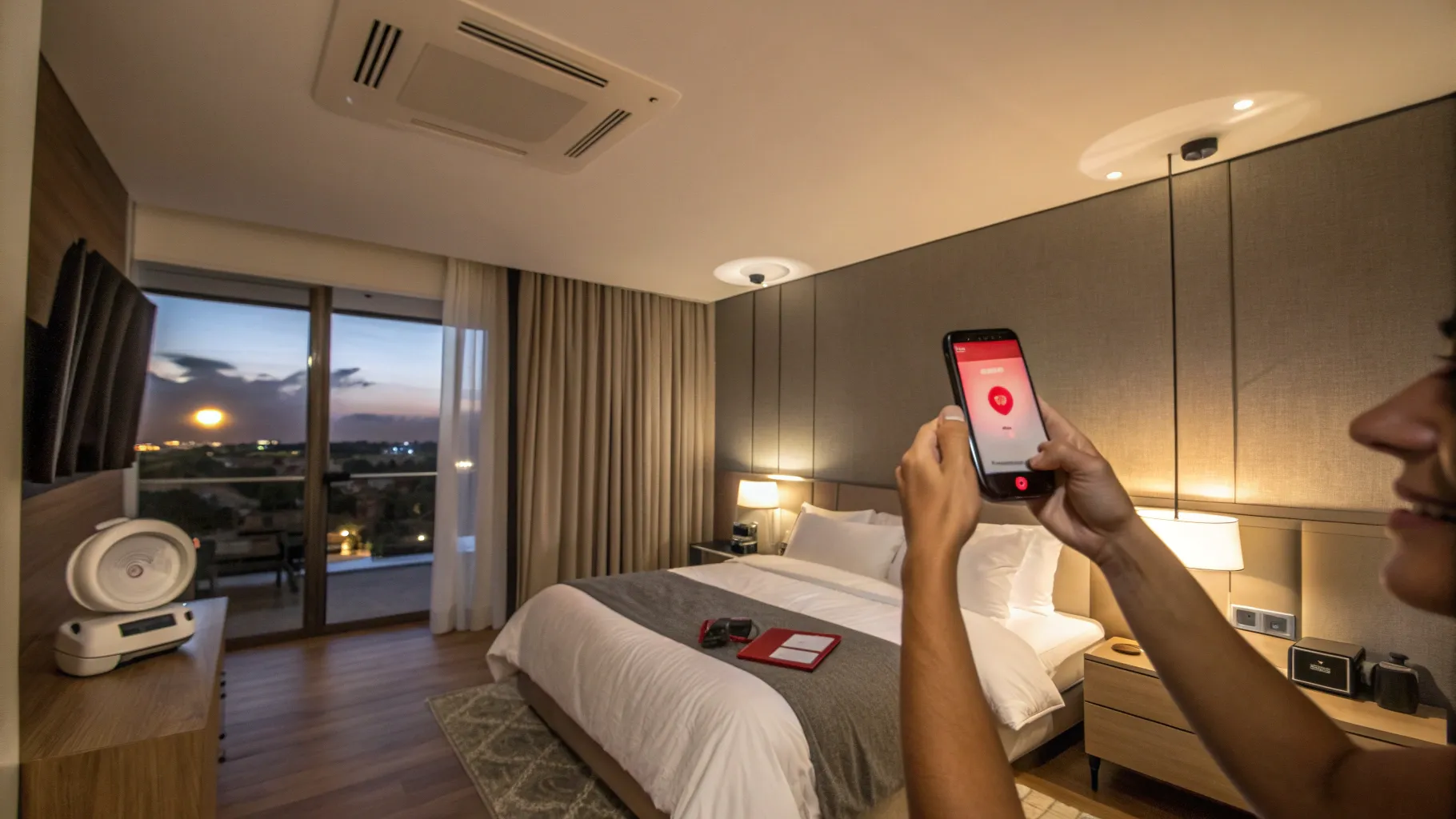
Search the app store and you'll find dozens of options promising to be a Secret Camera Detector App — apps that claim to sniff out hidden cameras in hotel rooms, Airbnbs, dressing rooms, or anywhere you might be concerned about being watched. But how well do these Secret Camera Detector App offerings actually work in real life? In this article I walk through a fresh, hands-on test of popular free apps, explain how these tools are supposed to work, point out their strengths and weaknesses, and give a practical checklist for a reliable, low-cost sweep that does not rely solely on any single Secret Camera Detector App.
This piece is based on a 2025 video test by SEO Hobby Expert — a creator who re-ran an experiment originally done in 2018. He tested three free apps from the Play Store, used actual spy cameras (a small Wi‑Fi camera with infrared LEDs and a larger battery-powered wireless camera), and compared Wi-Fi scanning, magnetometer readings, and lens-reflection detection. Below you'll find a clear explanation of what he found, why many Secret Camera Detector App claims fall short, and a structured approach you can use to protect your privacy.
Table of Contents
- Why people look for a Secret Camera Detector App
- How Secret Camera Detector Apps are supposed to work
- Which apps were tested in the video
- Real-world test setup
- App-by-app results
- Summary of test findings
- Why Secret Camera Detector App features often fail
- Practical sweep: a step-by-step checklist that doesn’t rely on a single Secret Camera Detector App
- How to use your phone effectively (and what not to expect from a Secret Camera Detector App)
- Legal and ethical considerations
- Why a single Secret Camera Detector App is rarely enough
- How spy cameras have changed (and why detection gets harder)
- Conclusion: practical recommendations
- FAQ
Why people look for a Secret Camera Detector App
Privacy concerns are real. As spy cameras have become smaller, cheaper, and easier to deploy, it's understandable that travelers, tenants, and anyone using shared or rented spaces want a simple solution. The appeal of a Secret Camera Detector App is obvious: open the app, scan the room from your phone, and instantly know whether a camera is present. Unfortunately, reality rarely matches that promise. Most of these apps try to blend multiple detection techniques into one interface, but each method has fundamental limitations. Understanding those limits is the first step toward protecting yourself.
How Secret Camera Detector Apps are supposed to work
Most of the popular Secret Camera Detector App offerings use one or more of three basic techniques. Each technique is imperfect but can be useful as part of a combined approach.
1) Wi‑Fi network scanning
What it does: The app scans the local Wi‑Fi network, listing IP addresses and device types it can detect. Cameras that stream video over the local network will often appear.
Limitations: The scan only finds devices on the same network as your phone. If a camera is using its own Wi‑Fi access point, a cellular connection, or a different network, a Secret Camera Detector App will not see it. Also, many items that show up on the network are ordinary smartphones, tablets, and smart home devices — not necessarily cameras.
2) Magnetometer (magnetic field) detection
What it does: The phone's magnetometer (the sensor that powers your compass) senses magnetic fields. Secret Camera Detector App features that use the magnetometer try to detect electronics that emit electromagnetic fields — the idea being that powered cameras and their circuitry create a detectable signature.
Limitations: Magnetometers detect many things: speakers, motors, magnetic clasps, metallic objects, or electrical wiring. They cannot reliably distinguish a camera from any other metallic or powered device. In a room filled with electronics, readings are noisy and ambiguous. Many Secret Camera Detector App implementations also confuse “metal detection” (looking for mass of metal) with “magnetic detection” (looking for electromagnetic fields), which adds further confusion.
3) Lens reflection and infrared detection
What it does: The app uses the phone's flash to look for tiny reflections from camera lenses, and it also looks for infrared (IR) LEDs used by cameras for night vision. A camera lens, being a curved piece of glass, can reflect light back toward the phone and appear as a bright dot in a darkened scene.
Limitations: Lens reflection detection can work in controlled situations, but it produces many false positives. Shiny plastic, glossy finishes, clock displays, mirrors, or decorative hardware will often reflect like a lens. The reflection method also depends heavily on the size, coating, and angle of the lens; many modern spy lenses have anti-reflective coatings or are so small that they don't produce an easily detected reflection. For IR detection, many phone cameras have filters that block IR wavelengths — some will show IR LEDs as purple or white dots, while others will not. So IR checks are hit-or-miss depending on your phone model and camera hardware.
Which apps were tested in the video
The video author downloaded three free Android apps from the Play Store and tested them without any paid upgrades. He selected apps that were popular or had high ratings and tested them the same way a typical user would. The apps tested were:
- Hidden Camera Detector — 4.1 rating, ~27,000 reviews, over 10 million downloads.
- All Devices Detector Finder — 4.8 rating, ~8,000 reviews, ~500,000 downloads.
- Camera Detector — Hidden Spy — 4.5 rating, ~16,000 reviews, over 1 million downloads.
Note: The names above match the app labels used in the test. App names and features change frequently; the test used the free versions available in 2025 and was not sponsored.
Real-world test setup
To reduce electrical interference and make testing conditions repeatable, the video author took the test outdoors. The targets were:
- A small Wi‑Fi camera with built-in infrared LEDs (night vision).
- A larger battery-powered wireless camera (magnetic/heavier).
- A spinning “Spy pan” camera (mentioned as an additional target if Wi‑Fi scan succeeded).
Each app was exercised using the features it provided: Wi‑Fi scans, magnetometer/metal detection, and lens-reflection detection. Ads in the free apps interrupted the workflow, as they often do, and some premium features (like lens detection in one app) were locked behind paywalls.
App-by-app results
Hidden Camera Detector (4.1 / 10M+ downloads)
Features available in free version: Wi‑Fi scan, magnetic detection, ads frequent.
Test results: The Wi‑Fi scan in this Secret Camera Detector App simply listed devices on the network; it did not clearly identify the camera as suspicious. Lens detection was not available in the free version (behind a paywall), and magnetic detection did not produce a clear reading on the wired/bigger camera. In short, the free app failed to provide reliable detection in this setup, and ads disrupted the testing experience.
All Devices Detector Finder (4.8 / ~500k downloads)
Features available in free version: No Wi‑Fi scan, multiple magnetometer-based tools that were essentially the same with different UI skins.
Test results: The app produced some magnetic readings near the larger camera, but the output was ambiguous and likely would be confusing in a real room full of electronics and metal objects. The readings alone did not distinguish a camera from other common sources of magnetic activity (phones, laptops, speakers).
Camera Detector — Hidden Spy (4.5 / 1M+ downloads)
Features available in free version: Wi‑Fi scanning, magnet detection, metal detection, lens-reflection detection, IR detection.
Test results: The Wi‑Fi scan found devices on the network, but they were clearly smartphones and common gadgets — not an obvious camera stream. The app's interface had a confusing swap between "magnet detection" and "metal detection" labels, causing uncertainty about which sensor was being used. The metal detector unsurprisingly flagged the visible metal camera sitting on a plastic table. Magnet detection produced little or no meaningful reading. Lens detection appeared to spot a reflection, but it was unclear whether that reflection came from the camera's lens or from shiny black plastic on the camera body. In subsequent lens checks, the small Wi‑Fi camera produced some reflection, but the test showed how easy it is for reflections from non-lens surfaces to create false positives.
Summary of test findings
After re-running the experiment from 2018 with 2025 hardware and apps, the verdict was blunt: not much has changed in five years. Here are the key takeaways.
- The Wi‑Fi scanning features of these Secret Camera Detector App tools mostly list devices on your network — useful, but limited. They can't find cameras that use their own network, cellular backhaul, or that are offline.
- Magnetometer-based detection is noisy and unreliable. In simple setups, it can detect metal objects or powered electronics, but in real rooms it's prone to false positives and misses.
- Lens reflection detection can sometimes find lenses, but it also generates lots of false positives from shiny objects and is highly dependent on lens size, coating, and angle.
- If you want real privacy protection, treat these apps as one small tool among many. Physical inspection, suspicious-item awareness, and better sensors or professional sweeps are often necessary.
Why Secret Camera Detector App features often fail
Apps promise convenience, but several technical and practical reasons limit their effectiveness:
- Network isolation: Cameras don't need to be on the same Wi‑Fi as your phone. They can use a dedicated hotspot or cellular link.
- Hardware variability: Phone sensor capabilities differ. Some phones have sensitive magnetometers and cameras that pick up IR; others effectively block IR and have less-sensitive magnetic readings.
- Environmental noise: Modern rooms often contain many electronic and metal objects. Magnetometer readings mix with background noise, and reflection detection misreads glossy surfaces.
- App design and monetization: Many free Secret Camera Detector App versions limit features to paid tiers and pepper interfaces with ads, making testing and real-time scanning inconvenient.
- Small, well‑disguised cameras: Spy cameras are increasingly tiny and hidden behind dark, diffuse materials or integrated into everyday objects that don't provide a useful reflection or magnetic signature.
Practical sweep: a step-by-step checklist that doesn’t rely on a single Secret Camera Detector App
If you want to reliably check a room, use a layered manual approach. Below is a practical checklist you can follow with minimal gear.
Immediate visual and physical inspection (5–10 minutes)
- Turn off lights. Look for small bright dots when shining your phone flashlight around the room — camera lenses often produce tiny reflections when illuminated head-on. You don't need a Secret Camera Detector App for this; a flashlight is enough.
- Inspect obvious hiding spots: smoke detectors, alarm clocks, power adapters and chargers, desk items, lamps, picture frames, stuffed animals, potted plants, vents, mirrors, and TV/internet boxes.
- Physically touch suspicious items (where safe): shake soft items gently and listen for unusual electronics inside, check for odd wiring or battery compartments, and verify if an apparent common object is actually designed to be there.
- Look for small pinholes or unusual seams in walls, outlets, or decorative items — even a tiny hole can allow a lens to see a room.
Quick electronic checks (5 minutes)
- Use your phone's Wi‑Fi settings to look for unfamiliar networks (SSIDs) or devices broadcasting an access point labeled like a camera brand. If you find a network called "IPCam" or similar, treat it as suspicious.
- Run a network scanner (there are reputable network apps) to list devices on the same Wi‑Fi. Note that this only finds devices on the network — cameras on other networks will be invisible.
- Use your phone camera (front and back) to scan the room in low light. A camera's IR LEDs, if active, may appear as faint purple or white dots on some phone cameras.
Advanced but low-cost tools
- Small RF detectors (under $50–$150): Can detect active radio transmissions from wireless cameras but may be fooled by other wireless devices and cannot detect purely wired cameras.
- Dedicated IR viewers or cheap digital cameras known to be sensitive to IR: These can reveal night-vision LEDs better than your phone if your phone camera filters IR.
- Physical mirror check: Use a small mirror to look behind gaps and into vents or behind furniture without exposing yourself unnecessarily.
When to hire a professional sweep
If you have material evidence of surveillance (sudden unexplained knowledge of private events, discovered recording files, or a discovered device) or if you face persistent privacy threats or stalking, hire a certified technical surveillance countermeasures (TSCM) professional. Professionals use spectrum analyzers, thermal imaging, high-grade RF detectors, and trained methods to find devices that consumer apps and gadgets often miss.
How to use your phone effectively (and what not to expect from a Secret Camera Detector App)
Your phone is a helpful tool, but it has limits. Here's what you can reasonably do:
- Flash + visual scan: Use the phone flashlight and slowly pan across the room, looking for bright pinpoint reflections. This is the most reliable single-phone technique for spotting exposed lenses.
- Camera + IR test: Switch to your phone's camera in dark conditions and look for glowing dots that indicate active IR LEDs. Test both front and back cameras; different sensors behave differently with IR.
- Network check: Check your Wi‑Fi list for odd SSIDs and use basic network scanner apps to see devices on the same network. Remember that absence of evidence is not evidence of absence.
- Magnetometer apps: Use magnetometer tools with skepticism. They may point you to a metal or powered object but can't identify it as a camera.
Legal and ethical considerations
Before you start tearing open objects, be aware of your legal and ethical boundaries. Laws vary by jurisdiction:
- In many places, it's illegal for a host to intentionally record guests without consent in private spaces. If you find evidence of illegal recording, contact legal authorities.
- Don't unlawfully tamper with property — in rental or hotel situations, document and report suspected devices rather than destroying them.
- If you suspect you're being monitored in a workplace, vehicle, or private property, consult your organization's policies or seek legal advice before taking action that might escalate the situation.
Why a single Secret Camera Detector App is rarely enough
The tested Secret Camera Detector App tools each attempted to bring multiple detection approaches into a single interface, but combining imperfect methods does not yield a perfect product. Wi‑Fi scans show devices but not their function; magnetometer readings are ambiguous; reflection detection is prone to false positives. As a result, relying on one app gives a false sense of security.
A better approach is to use a mix of: a careful physical search, basic electronic checks (Wi‑Fi and camera IR checks), inexpensive dedicated hardware if needed, and professional services for high-risk situations. This layered strategy compensates for the shortcomings of any one Secret Camera Detector App and gives you the best chance of finding hidden devices.
How spy cameras have changed (and why detection gets harder)
Spy cameras have become significantly smaller and more sophisticated. Advances include:
- Ultra‑compact lenses and modules that fit into ordinary objects.
- Battery-powered units with long run times and wireless streaming that may use their own hotspot or cellular data.
- Encrypted streams and clever power management that reduce electromagnetic signatures and RF transmission bursts, making RF and magnetometer detection harder.
- Better camouflage — devices disguised as chargers, smoke‑detector housings, or even everyday decor.
As cameras evolve, detection needs to become more methodical. A Secret Camera Detector App can be a part of that method, but it cannot be the entire solution.
Conclusion: practical recommendations
In short, a Secret Camera Detector App can help in some situations, but it is not a silver bullet. The 2025 test of popular free apps showed the same core issues as earlier experiments: Wi‑Fi scans list devices but are limited, magnetometer detection is unreliable, and lens detection produces many false positives. If privacy matters to you, do not rely solely on a Secret Camera Detector App.
Instead adopt this practical workflow:
- Start with a thorough visual and physical check using a flashlight — this catches many obvious hidden lenses.
- Use your phone camera in low light to look for IR LEDs.
- Scan local Wi‑Fi and look for suspicious SSIDs or unknown devices sharing your network.
- Consider a cheap RF detector or a second camera known to be IR-sensitive if you want extra assurance.
- If the situation is high-risk, hire a professional TSCM sweep.
Finally, if you want to see the hands-on test that inspired this article, check out the original video by SEO Hobby Expert. The creator ran the experiment using common free apps and real spy cameras and reached the same measured conclusion: be skeptical of any single Secret Camera Detector App, and favor a layered, methodical search.

FAQ
Q: Can a Secret Camera Detector App find every hidden camera?
A: No. No single Secret Camera Detector App can reliably find every hidden camera. Apps have technical limitations — especially with cameras using their own networks, cellular backhaul, or well-camouflaged hardware. Use a layered approach instead.
Q: Is Wi‑Fi scanning by a Secret Camera Detector App useful?
A: It can be useful to identify devices on the same network, but it only finds cameras that are connected to that same network. Many spy cameras use separate APs or out-of-band communication and won’t show up.
Q: How reliable is magnetometer detection in these apps?
A: Magnetometer detection is unreliable in real-world settings. It may detect metal or powered devices but cannot distinguish cameras from other electronics or metallic structures.
Q: Can I use my phone camera to detect IR night-vision LEDs?
A: Often yes. Some phone cameras can pick up IR LED glow in a dark room, showing as purple or white dots. However, phone camera hardware varies; some models filter IR strongly and won’t show the LEDs.
Q: What should I do if I find a hidden camera?
A: Document the device with photos, avoid destroying property, and report it to the property owner or local authorities if illegal recording is suspected. In a rental/hotel situation, contact management and consider moving accommodations if you feel unsafe.
Q: Are paid Secret Camera Detector App versions significantly better?
A: Paid upgrades sometimes add convenience, remove ads, or enable extra UI functions, but they rarely overcome the fundamental hardware and physics limitations discussed above. Paid apps are helpful but not definitive.
Q: When should I call a professional?
A: Call a certified technical surveillance countermeasures (TSCM) professional if you suspect targeted surveillance, stalking, or illegal recording that poses real harm. Professionals have the instruments and experience to find well-hidden and sophisticated devices.


Comments
Post a Comment